A full product redesign for this client reframed a bureaucratic legal service into a trusted, human-centred experience for people navigating some of life's hardest situations.
A critical service, working against itself
This client's business exists to solve one of life's most painful logistical problems: when someone dies or is incapacitated, the people who need to locate their legal documents often have no idea where to look, or if a document even exists. The registry provides a secure, trusted place to register those documents and their location, and to search for them when the time comes.
The service has genuine, significant value. But the platform wasn't communicating it. Cold, transactional in tone, and structured like a government form from the early 90’s, it read more like a file-storage utility than a trusted legal service. Users who arrived in their most vulnerable moments were confronted with opacity where they needed clarity, and indifference where they
needed empathy.
People arrived looking for something familiar like a will or a loved one's estate and found a process that felt like a government portal. The trust simply wasn't there.
The business had real ambition: to build a true national register of important legal documents that could ease some of the administrative burden Australians face during their hardest moments. The product needed to rise to meet that mission.
Grounding every decision in real behaviour
Before proposing a single solution, I introduced a research-driven design process to ensure every decision was grounded in real user behaviour and real business context.
This approach combined:
Semi-structured qualitative interviews with 3 existing users of the service, and 5 interviews via usertesting.com
A deep, thorough understanding and analysis of the end to end process and service offered, including the legal obligations
Contextual inquiry into the emotional circumstances each participant brought to the service
Heuristic analysis of the existing platform against usability and trust principles
Competitive landscape mapping across adjacent services (Willed, SafeWill, and more)
Thematic analysis to surface recurring patterns across interviews
Qualitative interviews
Distinct user jobs-to-be-done
Critical insight themes
THE VALUE GAP
Every interviewee struggled to articulate, without prompting, why they would register the location of a document rather than the document itself. The core value (being findable in a crisis) wasn’t self evident. Users couldn't picture the future moment where the service would matter to them or their loved ones.
Disconnected mental models
Users understood making a will. They did not understand registering one. The service spanned both, but the platform treated them as separate, failing to bridge two things users (unknowingly) experienced as deeply connected.
The charitable bequest pricing failure
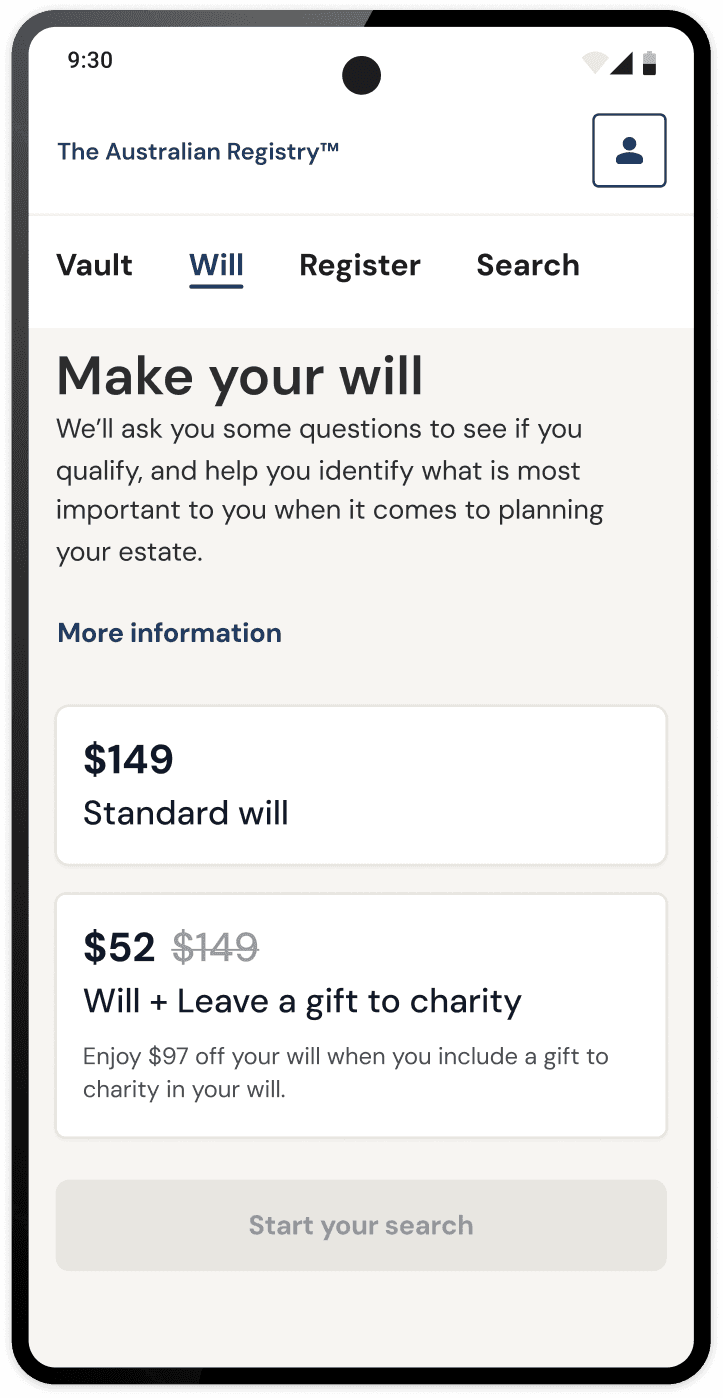
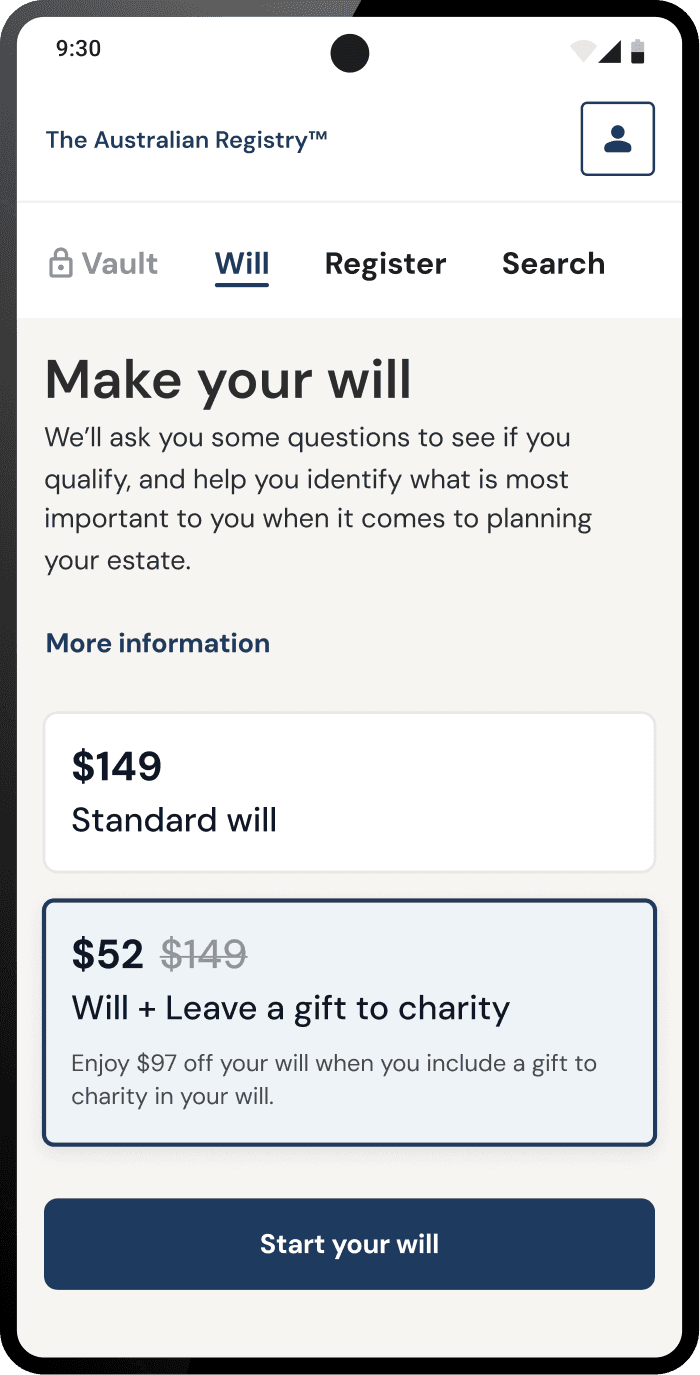
The business owner, passionate about charitable giving, had engineered a pricing mechanic where including a charitable bequest in a will reduced the cost from $149 to $52. A genuinely clever and touching idea. But the terminology was oblique, and users consistently chose the full-price option without engaging. A UX problem was costing both revenue and charitable impact simultaneously.
Search opacity eroding trust
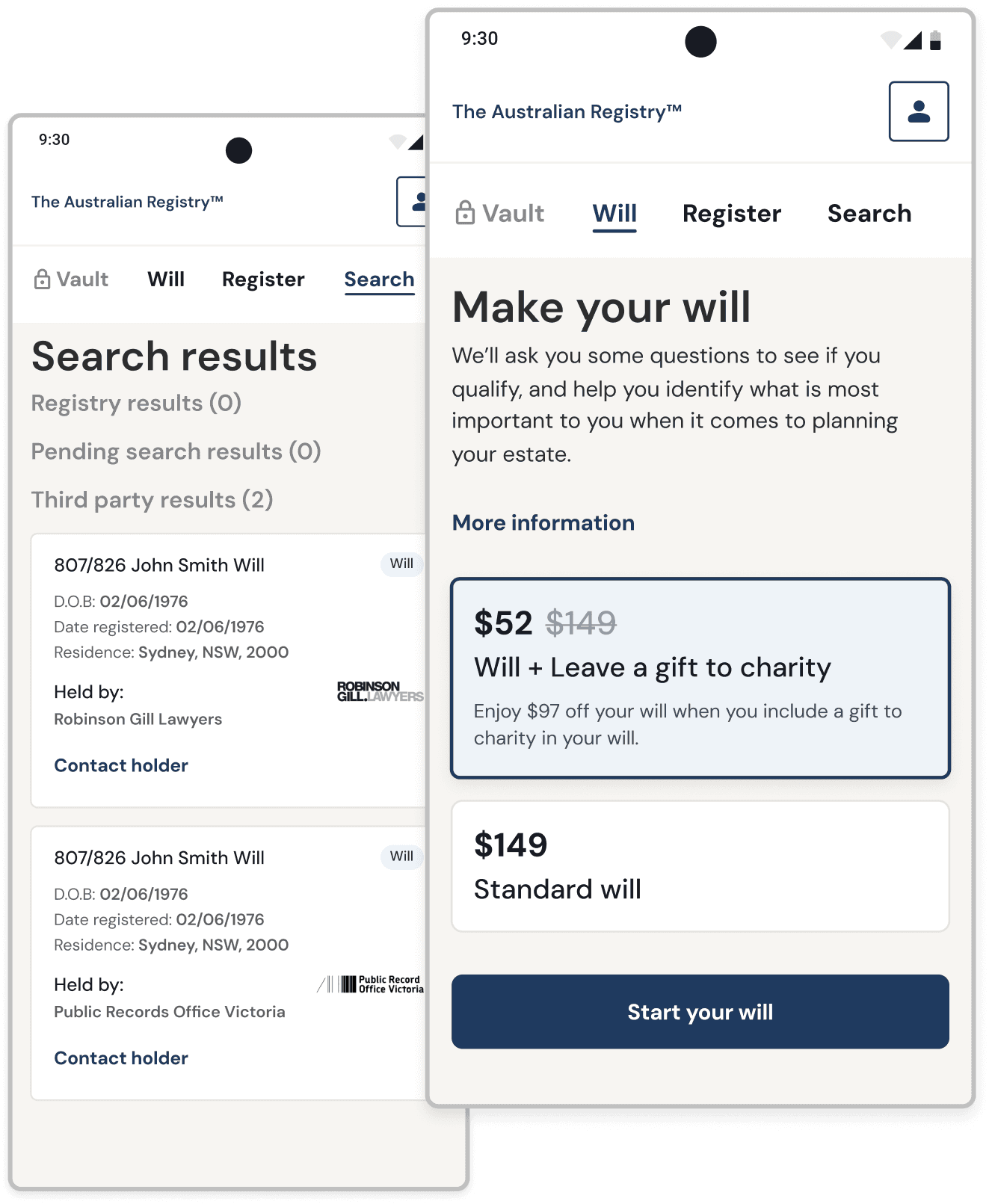
The search experience left users with unanswered questions at the worst possible moment: What exactly was searched? What does 'no result' mean? What do I do now? This wasn't a minor usability issue, it was a trust problem. People searching the registry were often in acute need, and the platform wasn’t meeting them where they were.
"I'm not really sure what happens after I search. Does it check everything? What if nothing comes up?"
Who we were really designing for
Across interviews and service usage patterns, four distinct user types emerged. Each arrives with a different emotional context, a different job to be done, and a fundamentally different relationship to the service. Rather than one generic flow for all of them, the redesign gave each their own path.
An experience vision to guide every decision
From synthesis, we defined a single experience north star to anchor the redesign and four design principles to test every decision against.
EXPERIENCE NORTH STAR
“We want to create a platform that anyone, regardless of their relationship to legal processes can navigate with confidence during one of life's most critical moments."
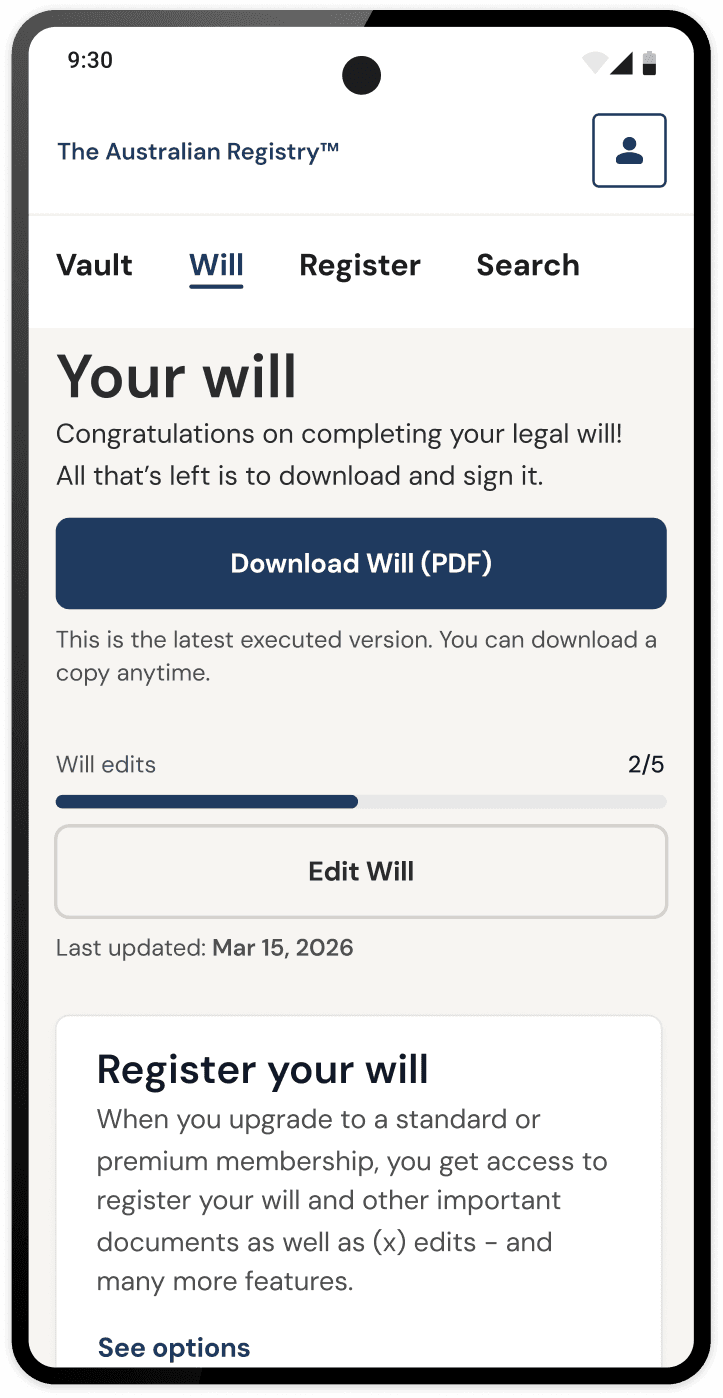
The will creation flow was rebuilt around outcome-driven language and a radically simplified pricing architecture. The charitable bequest offer, previously invisible behind legal jargon was now rewritten in plain, conversational terms. The value exchange is now unmistakable: including a gift to charity reduces the cost of a simple will from $149 to $52. Making generosity feel like the obvious choice is both a UX win and a business win.
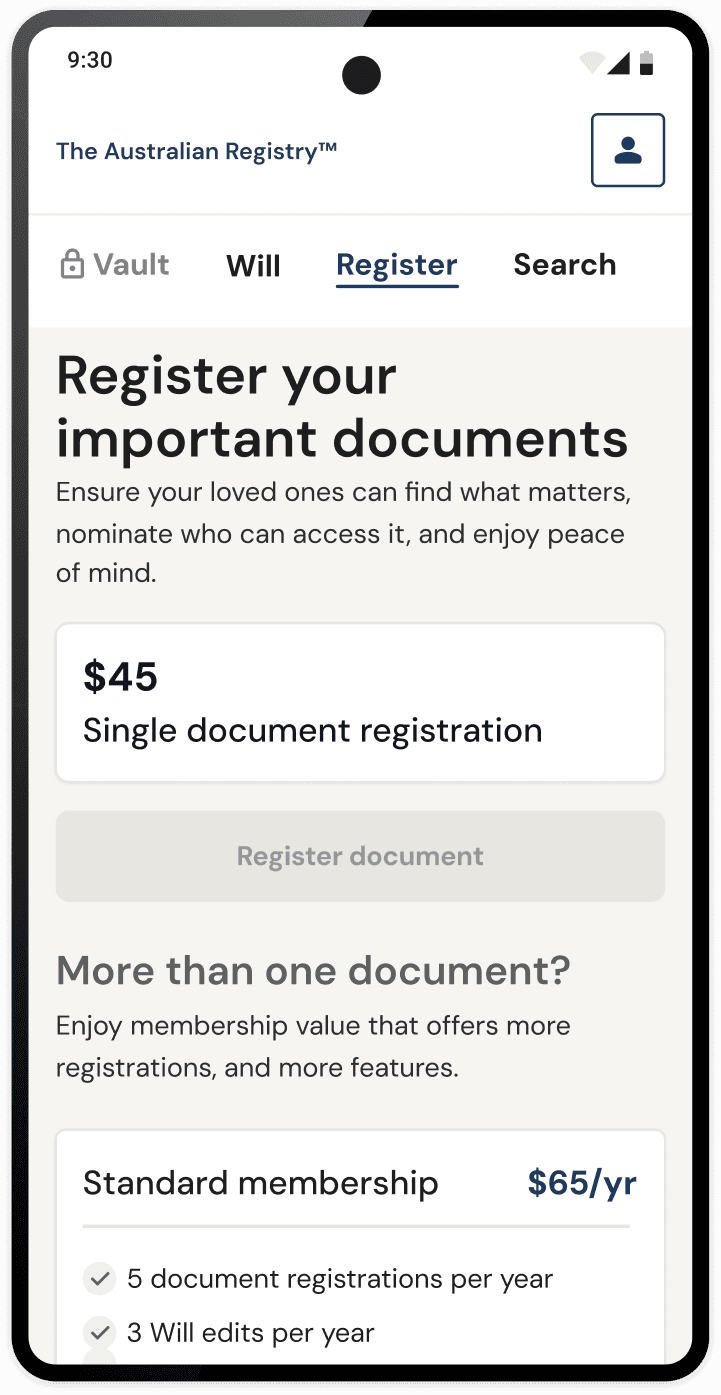
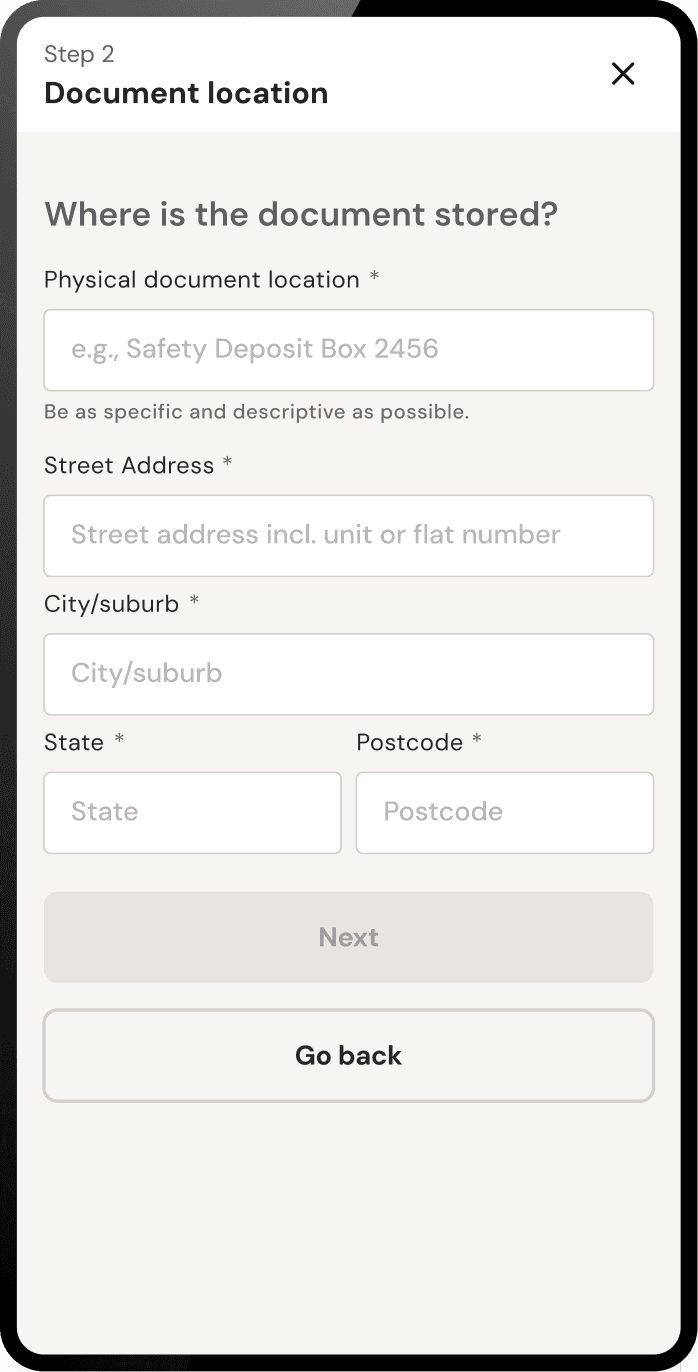
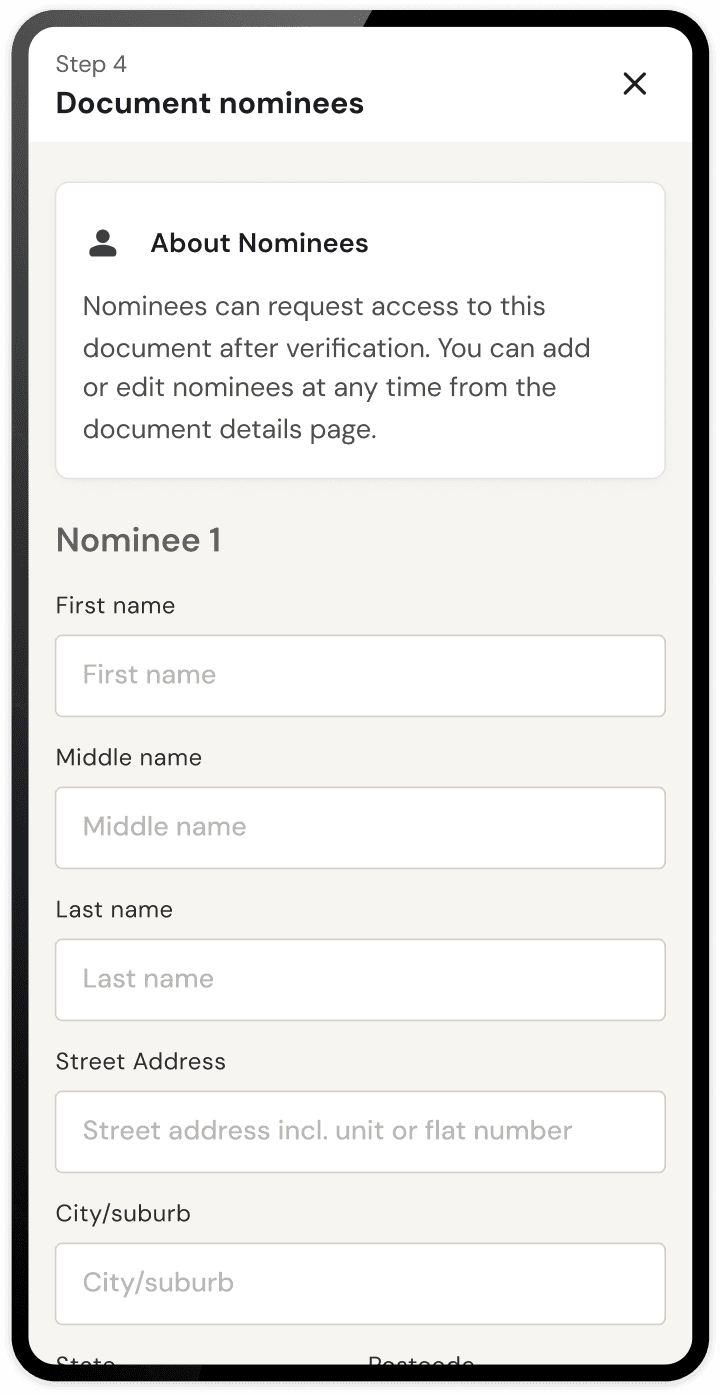
Document registration: Leading with outcomes, not process
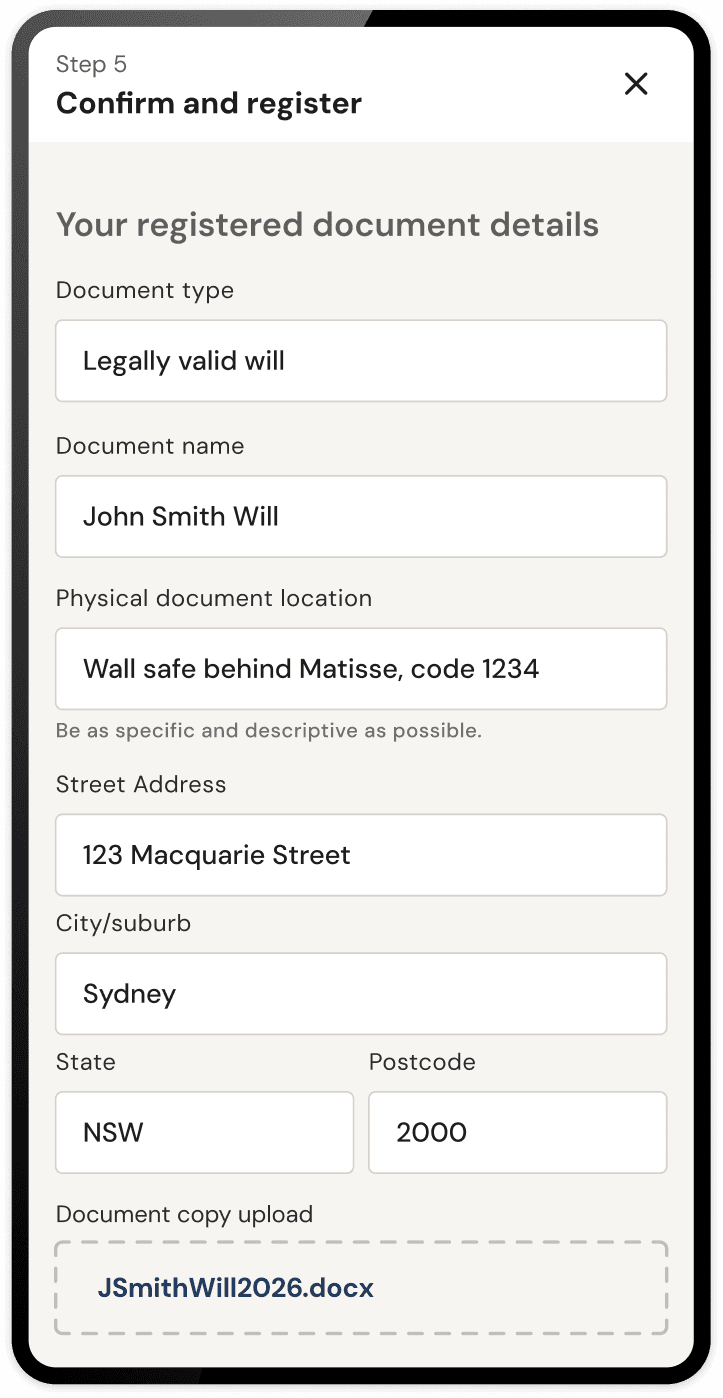
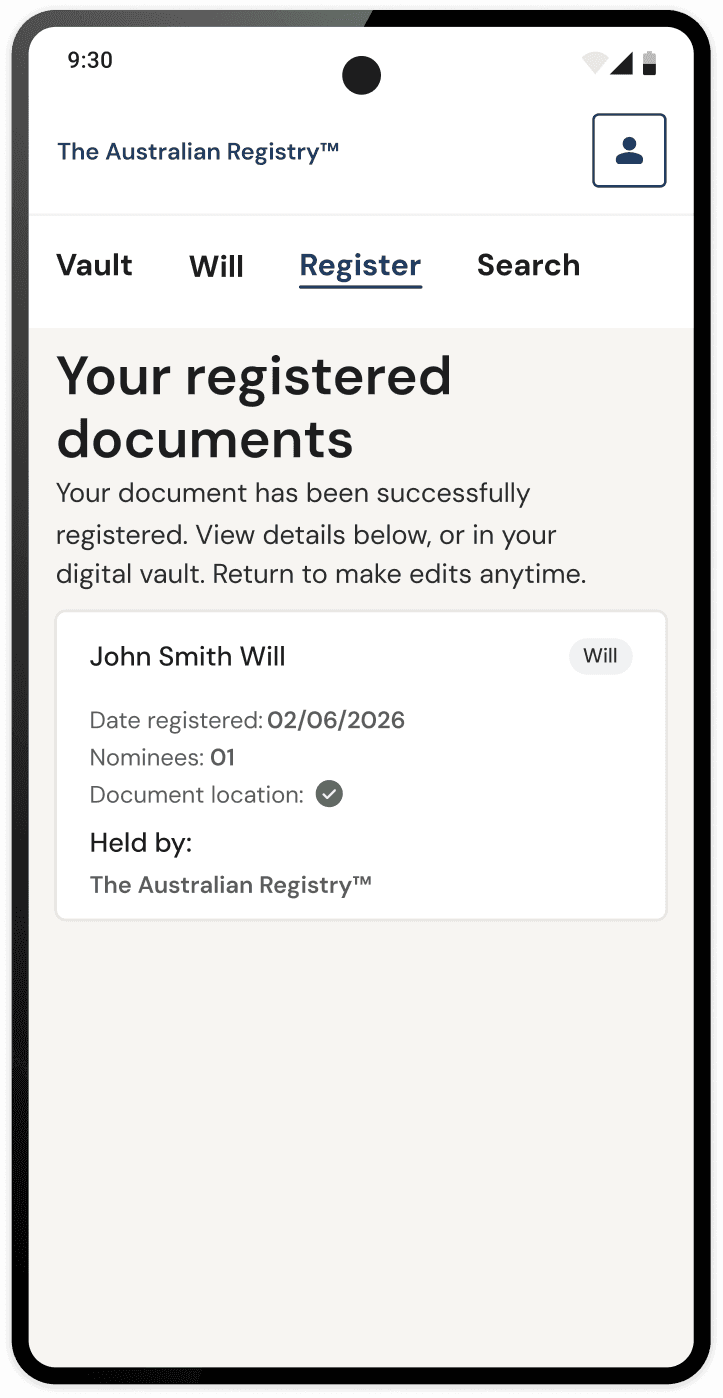
The registration flow was redesigned to lead with outcomes rather than mechanics. "Ensure your loved ones can find what matters, nominate who can access it, and enjoy peace of mind" instead of "Upload your document details." Membership tiers were restructured with plain-language feature lists and clear value progression.
Search: From dead end to trusted guide
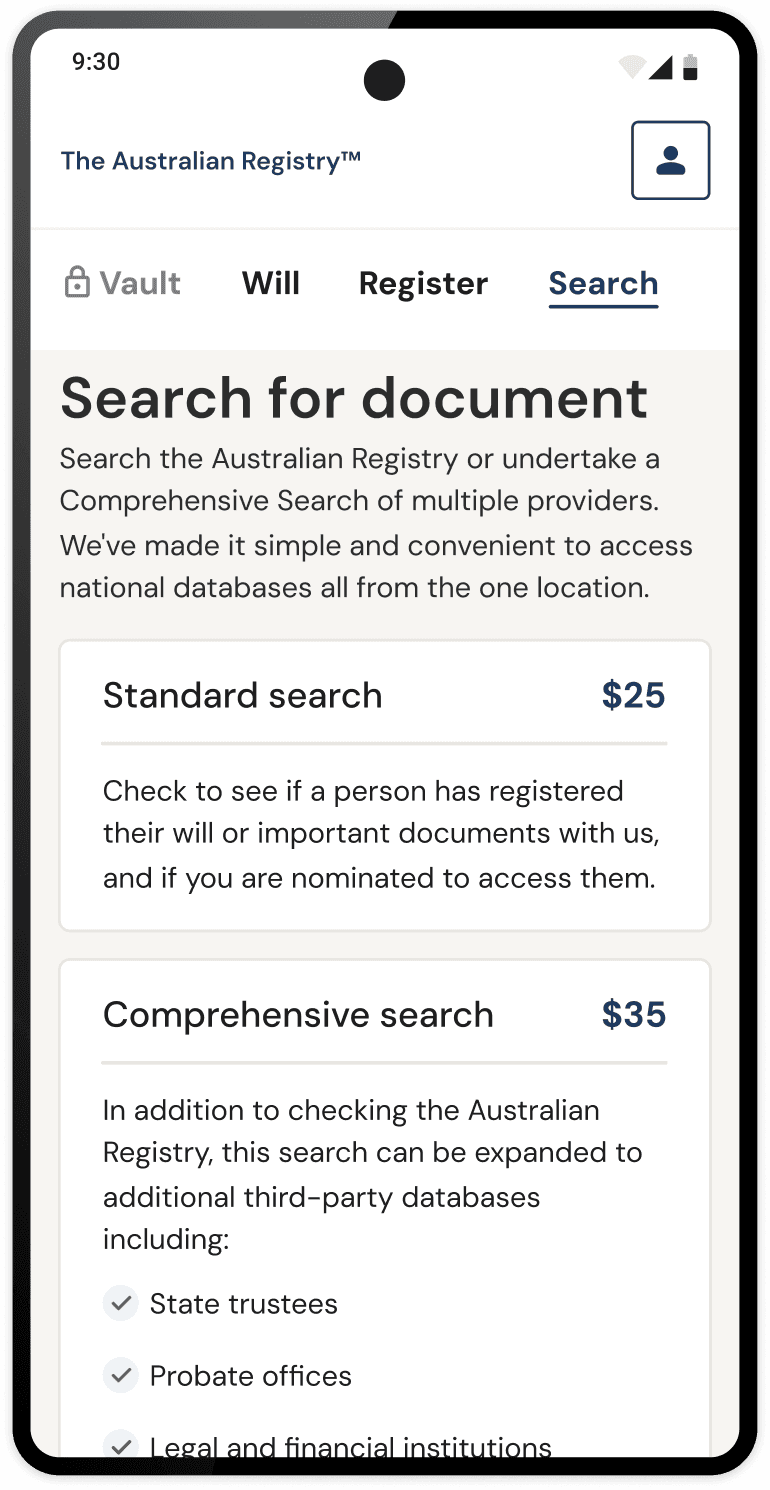
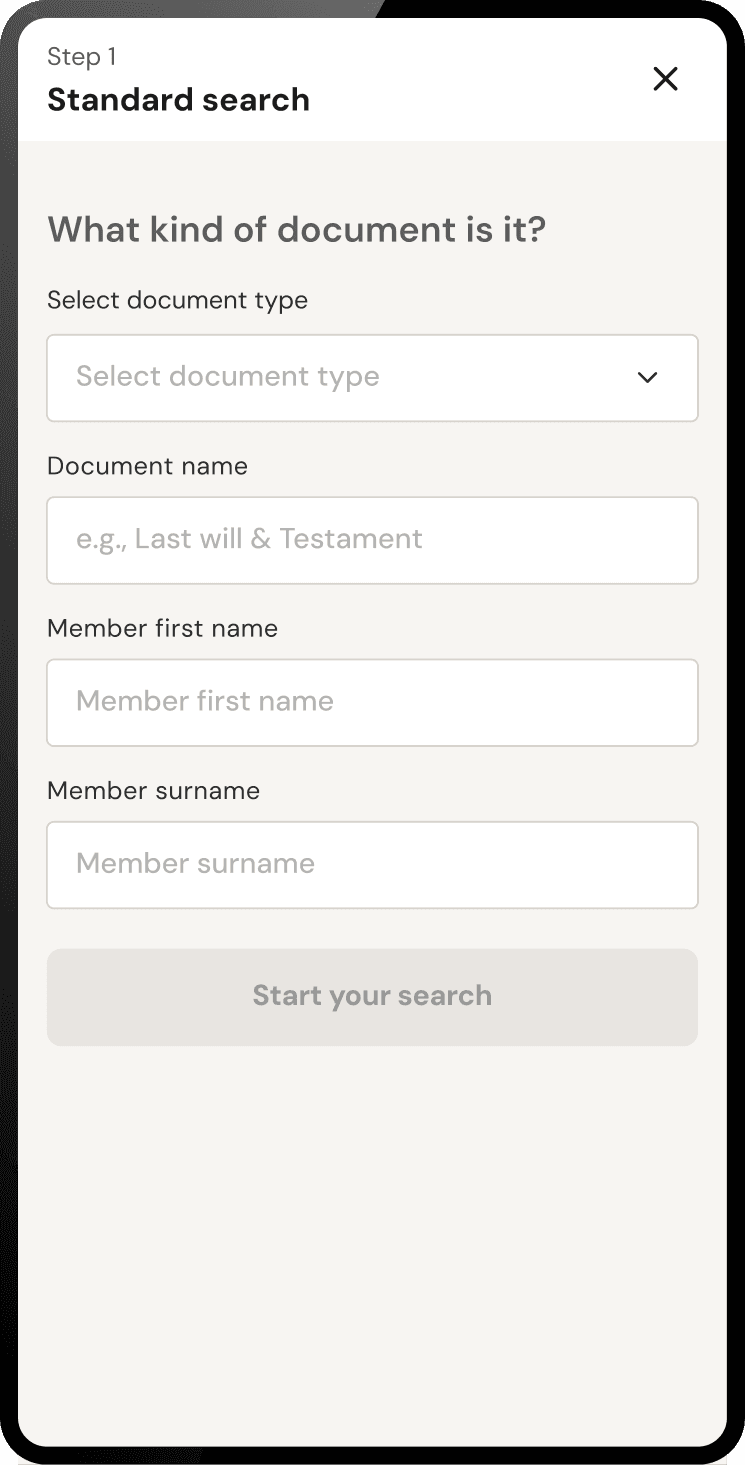
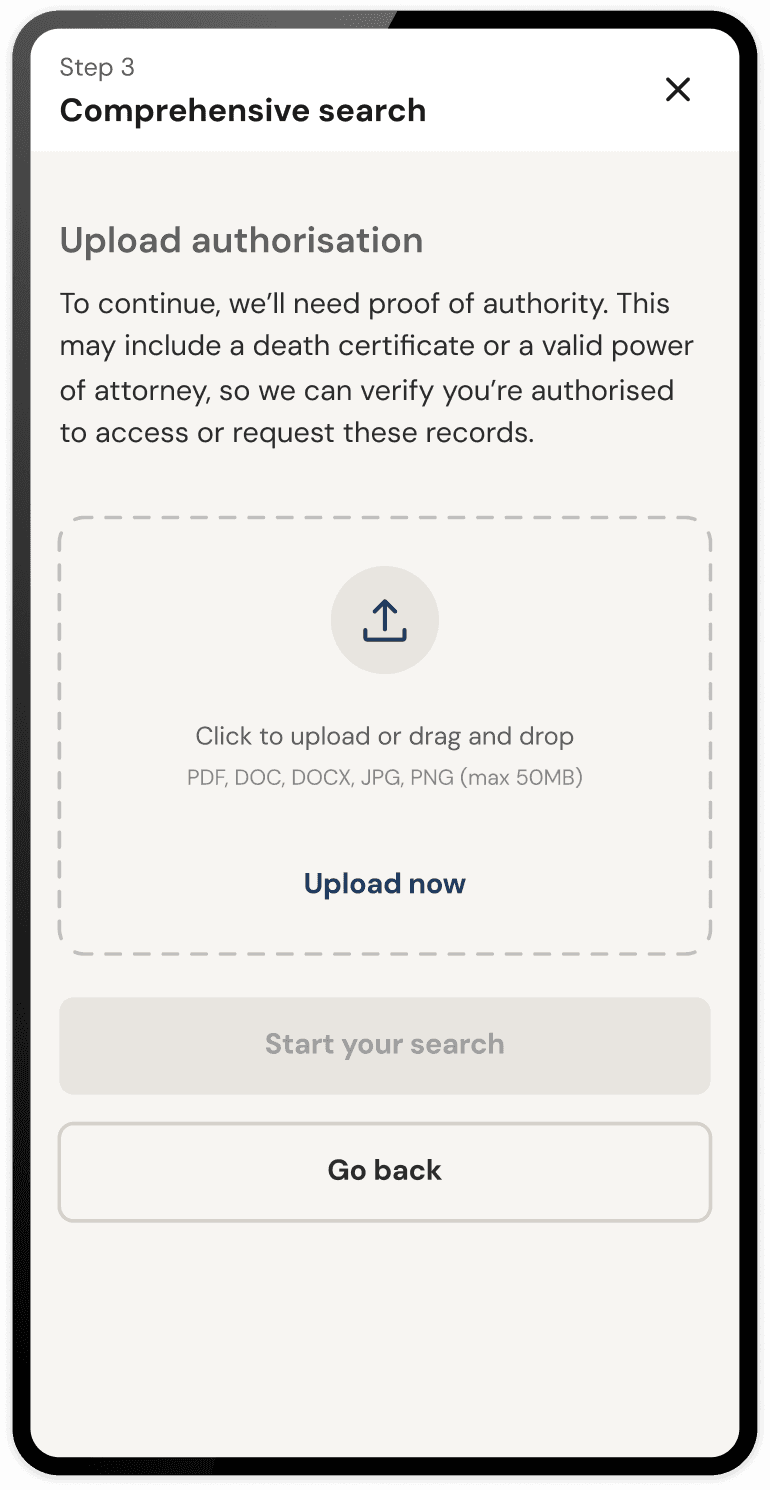
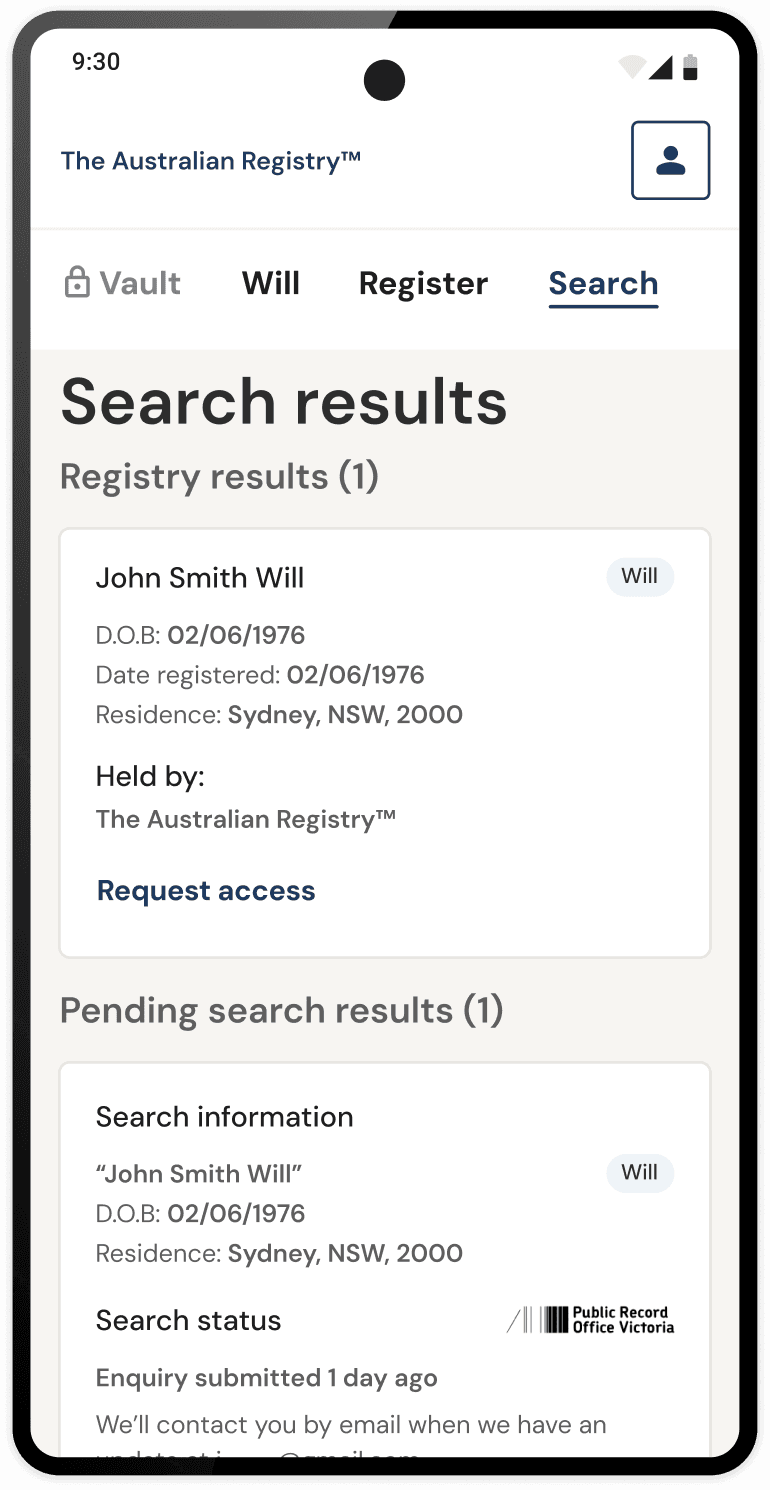
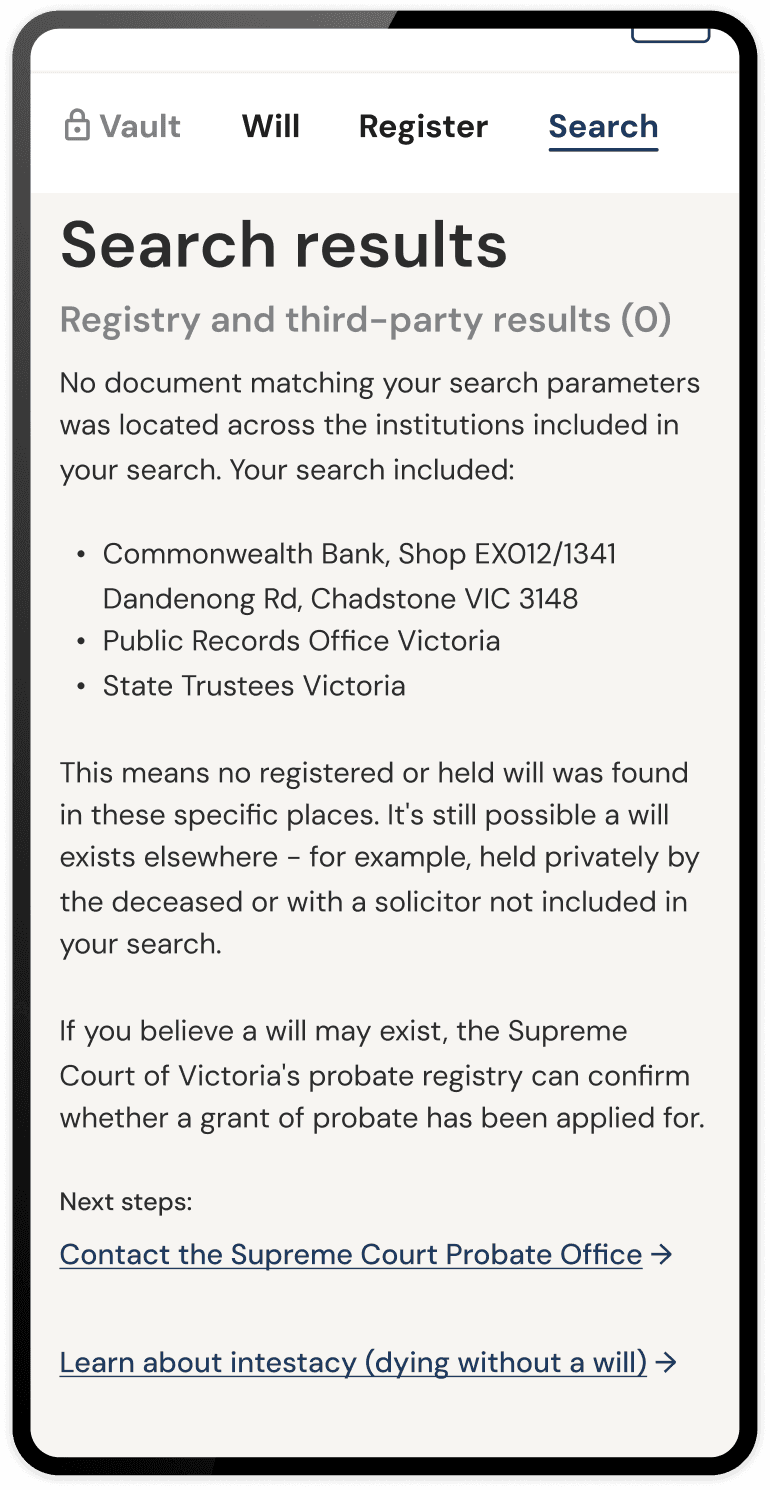
The search experience received the most fundamental structural overhaul. The previous flow ended in a generic empty state with no context, no explanation, and no direction. The redesign operates on two levels simultaneously.
First, transparency during the search itself: showing exactly which institutions are being searched, what a standard versus comprehensive search covers, and what the process involves in real time. Second, and most critically: never leaving the user without a useful outcome.
Failed searches now provide plain-language explanations of what the result means, contextual next steps (probate registry links, intestacy guides, legal resource articles), and a clear pathway to a broader comprehensive search across third-party institutions.
A product built for the whole journey
The redesign delivered a cohesive, production-ready Figma file spanning the complete user lifecycle across all four archetypes, from first contact through will creation, document registration, search, and the post-completion vault.